Here is the uncomfortable truth about how to hire a Controls Engineer in Metro Detroit: the people who can actually bring a line up are almost always employed, and they do not answer generic job posts. So the search is less about writing a clever listing and more about knowing exactly what you need, screening for it honestly, and moving before a candidate takes another offer. Do those three things and you fill the seat in a few weeks. Skip them and a rushed, wrong hire can cost you a production window and a restart.
This is the approach we use, and where a specialist Controls Engineer staffing partner actually helps.
What a Controls Engineer really owns
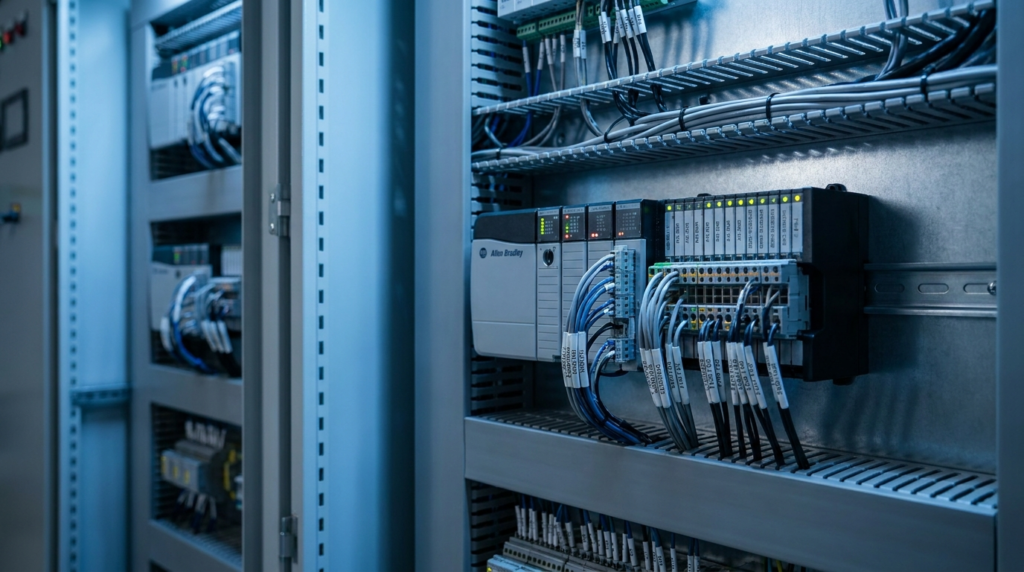
A Controls Engineer writes and commissions the software and wiring logic that make your equipment run: PLC programs, HMI and SCADA screens, drives and motion, and the integration that ties separate machines into one working line. When the job is done well, you never think about it. When it is not, you find out at 6 a.m. on a launch day when the line will not cycle. That gap between “looks qualified” and “can commission” is the whole problem you are hiring against.
Why controls hiring stalls in Metro Detroit
Supply is tight and demand is not slowing down. Southeast Michigan is packed with automotive suppliers, machine builders, and integrators, and they are all fishing in the same small pond for controls talent. The Bureau of Labor Statistics still projects steady, ongoing demand for electrical and electronics engineers, and locally the push toward more automation only tightens things further. The American Staffing Association’s workforce research makes the same point a different way: specialized technical roles are among the hardest to fill from a standing start. Practically, that means a slow interview loop or a vague posting will lose you the best people before you ever talk to them.
Define your platforms before you post
Controls experience does not transfer cleanly between brands. An engineer who is excellent in Allen Bradley Studio 5000 may have barely touched Siemens TIA Portal, and the reverse is just as true. Before you write a word of the job description, write down what you actually run. Which PLC family: Allen Bradley, Siemens, Mitsubishi, Omron? What is your HMI and SCADA layer: FactoryTalk, Ignition, Wonderware, WinCC? What kind of equipment will this person support day to day? A candidate who fits your stack will ramp in days. One who does not will spend your first month learning your platform on your clock.
Screen for commissioning, not keywords
Most bad controls hires trace back to an interview that checked whether someone could talk about a platform instead of whether they could stand up a system on it. The fastest way past that is a simple prompt: ask a candidate to walk you through a line they brought up from scratch. What broke first. How they found the fault. What they would wire or write differently next time. Someone who has only edited existing code gets vague here. Someone who has actually commissioned a line gets specific, fast, and a little opinionated. That is the signal you want. It is also where recruiters who have done the work themselves earn their keep, because they can hear the difference in the first ten minutes.
Contract, direct, or a mix of both
Match the model to the need. Contract fits a defined project, a launch, or coverage while you run a longer search for a permanent hire. Direct hire fits ongoing line support where you want this person on your team for years. Starting someone on contract and converting to a direct hire sits in between and quietly de-risks the whole thing: you get someone capable on the floor now and confirm the fit before you commit. If you are weighing the options, our breakdown of contract versus direct hire for engineering roles goes deeper.
Tighten the parts of the process you control
You cannot manufacture more Controls Engineers, but you can stop losing the ones you find. Decide your must-have platforms and disciplines before you post. Keep the interview loop to days, not weeks. Line up the decision-maker and the offer in advance so you are not waiting on a calendar when the right person shows up. Then let a partner with an active local controls network carry the sourcing, so a vetted shortlist lands in front of you instead of a stack of resumes you have to sort. Speed and quality are not a trade-off here. The slow process is usually the one that ends in a compromise hire.
Frequently asked questions
How long should hiring a Controls Engineer actually take?
With a clear scope and a tight interview loop, a vetted shortlist can come together in days and a signed offer within a few weeks. The delays that stretch it into months are almost always internal: slow scheduling, unclear requirements, or a decision-maker who is hard to pin down.
What is the single biggest hiring mistake for these roles?
Interviewing for platform familiarity instead of commissioning ability. Plenty of people can discuss Studio 5000. Far fewer can bring a line up and debug it under pressure, and that is the person you are actually paying for.
Should I insist on experience in my exact PLC brand?
For a short contract or an urgent line-down situation, yes, match the brand closely. For a longer-term direct hire, a strong engineer with deep experience in one major platform can usually cross over, so weigh transferable skill against how fast you need output.
Can a staffing partner really move faster than posting the job ourselves?
Usually, because a specialist is not starting cold. They already know local Controls Engineers who are open to the right move and can approach them directly, which is how you reach people who never see or respond to a public posting.
Hiring a Controls Engineer in Metro Detroit? Our recruiters have run controls projects themselves, so they screen on real capability and can put a vetted shortlist in front of you quickly. Request engineering talent or call 248-855-4474.