An open CNC Machinist seat is one of the most expensive vacancies in a shop, and most of the cost stays invisible until you add it up. A spindle that is not turning does not just delay the job in front of it. It backs up every job behind it, and it quietly turns your most expensive assets into floor decoration. If you have a machinist seat you cannot fill, here is the real math on what it costs, why the role is so hard to fill in Michigan, and how to actually close the gap. Start with the role itself on our CNC Machinist staffing page.
What an idle machine costs per shift
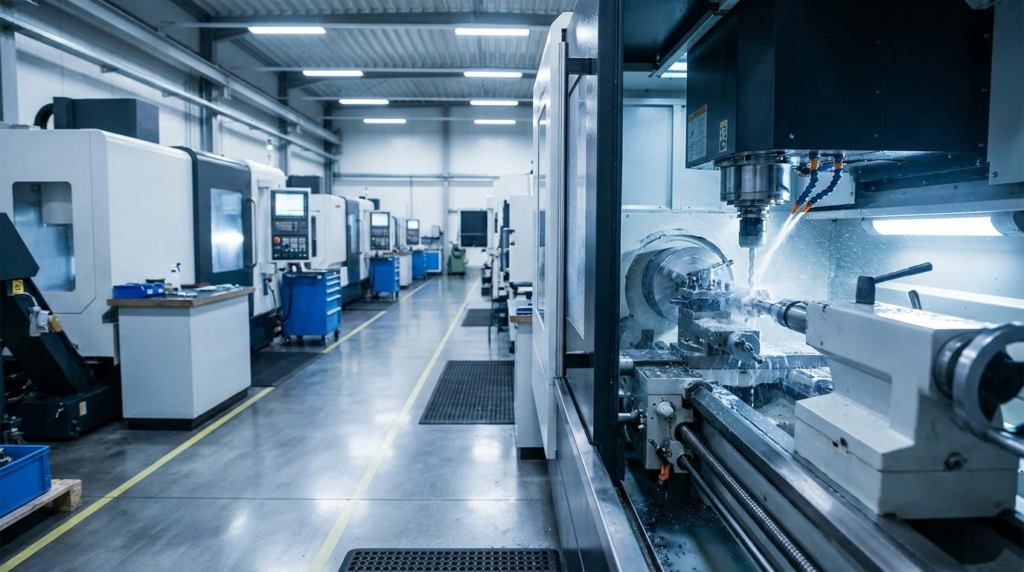
Begin with the machine, not the salary. If a CNC center bills at $75 to $125 an hour and sits idle for a shift because no one can run it, that is roughly $600 to $1,000 of lost capacity in a single day, before you count anything downstream. Now run that across a two-week vacancy and the number gets serious fast. The wage you are protecting by waiting for the perfect hire is often smaller than the capacity you are losing while you wait.
The costs that pile up behind the vacancy
The idle machine is only the start. To keep jobs moving, you pay overtime to the machinists covering the gap, which burns out the people you most want to keep. You subcontract work you would rather run in-house, at a worse margin. You risk a late shipment that costs you goodwill with a customer, or a penalty that costs you real money. None of these show up on the same line as “open position,” which is exactly why the true cost of the vacancy gets underestimated in the first place.
Overtime is not a free stopgap
Covering an open seat with overtime feels cheaper than hiring, but it rarely is. Beyond the premium pay, tired machinists make more mistakes, and mistakes on precision work turn into scrap and rework you pay for twice. Push it long enough and your best people start looking for a shop that is not permanently short-staffed. The vacancy you were quietly managing with overtime becomes a second vacancy you did not see coming, and now you are recruiting for two seats instead of one.
Why CNC Machinists are hard to hire in Michigan
Demand keeps outrunning supply. The Bureau of Labor Statistics notes that openings for machinists and Tool & Die Makers continue as the existing workforce retires faster than new machinists come up behind them. Michigan’s own labor market data shows the same squeeze locally, and Southeast Michigan’s dense base of shops means everyone is competing for the same experienced people. The strongest machinists are almost always already employed, so a slow or generic hiring process loses them before you ever make an offer.
What actually closes the gap fast
Two moves do most of the work. First, tighten what you control. Know the machines and controls you run, keep your interview quick, and have the offer ready to go so you are not losing days to scheduling. Second, work with a partner who keeps an active local machinist network, so a vetted shortlist shows up in days rather than after a month of posting into the void. Speed matters more here than in almost any other role, because the cost of the empty seat is running the entire time.
Do not overlook the programmer
A machinist is only as productive as the programs they run. If your cycle times are bloated or programs are not proven out before they hit the floor, a strong CNC Programmer can sometimes unlock more capacity than adding another operator. When you scope the machinist hire, look honestly at whether the real bottleneck is at the machine or upstream at the program.
Contract and direct options
You do not have to choose between an empty seat and a risky permanent hire. Contract staffing gets a qualified machinist on the floor now and lets you convert to a direct hire once the fit is proven, which also covers you cleanly through a production ramp or a seasonal surge. The point is to stop the bleeding first, then make the permanent decision from a position of strength rather than desperation.
Frequently asked questions
How much does an unfilled CNC Machinist role cost per day?
Between idle machine time, overtime to cover the gap, and slipped jobs, an open seat commonly costs more per day than the machinist’s wage, often $600 to $1,000 or more in lost capacity for a single center.
Why not just raise the pay to fill it faster?
Pay matters, but on its own it rarely fixes a slow or unfocused process. The best machinists are already working, so speed, a clear scope, and direct outreach usually move the needle more than another dollar an hour.
Is a contract machinist worth the higher hourly rate?
When the alternative is an idle machine losing hundreds of dollars a shift, a contract machinist who starts this week almost always pays for the rate difference and then some. You are buying recovered capacity, not just labor.
How quickly can you place a CNC Machinist?
With a clear scope and a fast decision on your side, a vetted shortlist can come together in days from an active local network, and qualified contract machinists can often start within the week.
Have an open machinist seat in Metro Detroit? We can put a vetted shortlist in front of you fast. See CNC Machinist staffing or request talent at 248-855-4474.